|
Gardening classes with a
difference!
... teaching not just the when and how, but WHY.
Gardening
is an endlessly rewarding craft that brings together old and
young, rich and poor, philosopher and farmer, old world and
new. Few leisure pursuits bridge as many divides or
has the potential for richer pleasures. A
gardener's education never ends - there are new
curiosities and creative possibilities to explore with every
turn of the season and year.
The gardening lessons I've developed over the years have the
goal of helping gardeners integrate the art of garden design
with the science at work in the plants and the soil that
supports them, without forgetting that gardening can be -
and should be - tons of inspiring and creative fun, not
"work"!
Using
a common-sense, but no-dummies approach, each
lesson usually ends with a "now-I-get-it" moment that
leads you to confident practical decisions and inspired
design ideas to take home to your garden. The
underlying fact that even the smallest garden should be your
own private playground, where endless creative
possibilities and natural curiosities can be explored in
real time, is the overall spirit of my gardening philosophy,
and guides all of the lessons.
Gardening isn't just about an
end goal, but is an on-going process that -
- feeds the creative spirit,
- engages a curious mind, - and nurtures the soul.
The
possibilities and rewards are endless! Join us for 2019
classes.
Evelyn Wolf
|
Gardening classes since 1995, where
my passion for plants, gardens and the joy they can bring
to our lives is always evident.
Evelyn Wolf, Gardener
All
classes take place at our gardens in
Queensville (East Gwillimbury),
just north of Newmarket.
|
|
COURSES Integrated
series of in-depth lessons, combining - instruction,
discussion, demos, slide show, outdoor hands-on experience when
possible, and detailed lesson notes to take home.
Maximum 8 participants. Courses usually run in late winter /
early spring, before the active gardening season.
(Different course options, below.)
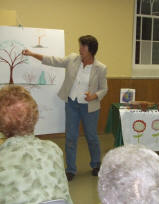
WORKSHOPS In-depth 2 or 3 hour lessons focused on hands-on
learning, plus detailed take-home notes with further information
on the topic. Some are limited to just 6
participants. Workshops run through the active gardening
season at my display garden in Queensville, just North of
Newmarket. (Workshop
topic options, below.)
Questions, or to inquire about customized lessons or seminars
geared to landscape crew training or presentation to your
community group, email anytime.
Cheers! Evelyn
|
|
2019 Courses
& Workshops Calendar -
Register soon! (Course class size is limited to
9 and workshops to 6.)
|
| Courses - a series of integrated lessons,
combining - instruction, demos, lots of Q&A, a slide
show, and detailed lesson sheets to take
home. Lessons are designed to build on each
other rather than stand alone, for a more thorough learning
experience that ties together the many elements working together
in your garden. |
PERENNIAL
GARDEN ESSENTIALS or "Think Like a Plant!"
A comprehensive course on Perennial and Shrub
gardening.
6 lesson course, 1 per week.
2019 Dates - Feb 21st - April 3rd
Thurs. afternoons 12:00 - 3:00
OR - Feb 26th - April 8th Tues.
evenings 5:30 - 8:30
(see above calendar for
exact dates - there's some "skip" weeks.)
$365.00 (+hst)
maximum 8 participants.
Gardening involves thousands of details and choices, but
there are basic facts in the natural world which
everything follows from. This course covers these
essentials thoroughly, with an entire detailed lesson
devoted to each important topic from soil care and shrub
pruning to creating a personalized design.
This is our
comprehensive course we've been running for many
years, that takes participants through all the
important topics to design and manage a successful
perennial garden. This integrated
series of 3hr lessons is designed to help gardeners
understand that there are no hard and fast rules to
follow, but instead facts to juggle as you come up
with your own solutions to problems or right way of
doing things that match available maintenance time,
site conditions, and design tastes. Lessons echo
and overlap with each other, so it becomes clear how
all garden choices and decisions are connected.
Complete with thorough hand-out notes to take home,
this course will help you sort through all the
conflicting advice out there and have you gardening
with common-sense and confidence!
Understanding plants' seasonal life cycles ...
soil care & mulching ... starting a new
garden ... developing maintenance routines
... designing great plant combinations ... working
with your own garden site's limitations and strengths
... tweaking zone hardiness ... correct shrub
pruning ... dividing perennials for either health or
sharing ... lowering maintenance and water input ...
appropriate plant choices ... pest control ... weed
control ...
FULL
LIST OF TOPICS COVERED BELOW
|
A course for complete
BEGINNERS.
GET GROWING! Your New Garden.
3 lesson course, 1 per wk.
2019
dates - Sat. April 6th, 12th & 26th. 1:00 -
4:00
$155.00 (+hst) max
10 participants.
If you're a complete newcomer to perennial gardening,
you may find our main "..Essentials" course just too
hard to follow. Here's the course for
you! A thorough beginner's course to
get you started down the exciting and creative path of
gardening with perennials and shrubs. The cost of
the course will be quickly recouped by avoiding even
just one of the many common beginner's mistakes!
From the basics of soil preparation and site appropriate
plant choices, to creative design ideas to get your
first garden going successfully, will be
covered. Starting right helps you
avoid many years of problem fixing. Lots of
Q&A opportunities will address your particular
garden issues, questions, or design challenges. FULL DETAILS BELOW |
|
|
LANDSCAPE MAINTENANCE CREW CRASH
COURSE TRAINING.
Similar to my course "Gardening for Beginners" above, but
focusing less on learning the horticultural details and more on
general rules of thumb for what to do when, and the general
essentials of garden care month by month. The emphasis is
on learning about the different types of plants and
how/where/when to - pinch for fullness and height
control; deadhead for continuing bloom; basics of correct
shrub pruning; types of mulch and applying
correctly; identifying different weeds and which ones pose
the worst control problems; when and if fertilizer is
needed; etc. ... the basic how-tos for tending a
mixed perennial and shrub garden. (I manage a garden
services crew myself, so I understand where the usual
knowledge gaps are, and how to cut through the technical
jargon and get to the essentials.) |
|
RETHINKING THE FRONT LAWN
3 week course. Fall 2019
Keeping a nice lawn means engaging in a
costly, tedious, environmentally un-friendly, and on-going
battle with grubs, fertilizers, lawnmowers, noise, and
a weekly maintenance grind.
Why not reduce or eliminate that high cost green
carpet and catch the popular wave of establishing a full
front garden instead!
Think outside the garden box and learn
how to apply basic design rules and how to prepare a
garden that's lower-maintenance with lower water needs.
In step-by-step lessons we’ll first showcase the many design possibilities
through a slide show and deconstruction of different looks
and styles; review some of the reasons a full front
garden is a desirable option over turf; and
cover all the practical matters of creating your
full front yard garden such as - soil & site analysis;
bed preparation; design rules to follow; planning for
reduced water needs; lower-maintenance; low-water plant
choices; etc.
This short course is the first step down the path of
establishing a truly unique front garden that virtually
looks after itself compared to turf!
FULL DETAILS BELOW
|

|
| Workshops
- In-depth 2 or 3 hour
lessons, focused on hands-on learning when possible or live
demonstrations, plus detailed take-home notes with further
information on the topic. Maximum 6 - 8
participants. Workshops run through the active gardening
season at my display garden in Queensville, just North of
Newmarket. These workshops run outdoors, when possible, at
our display garden in Queensville |
Shrub
& Small Tree Pruning.
STOP THE TORTURE!
3hr demo /
hands-on / slide show / plus 24
page booklet hand-out to take home.
2019 Dates -
April 2nd, 5:00 - 8:00 $85.00 (+hst)
max 6 participants.
A thorough lesson on shrub
and small tree pruning. Limited to 6 people.
One
of the true arts of gardening, correct pruning is a
rewarding and creative investment in time, with
results that can't be bought at any price -
beautiful, healthy, mature plants strutting
their very best stuff.
How
to prune completely depends on why
you’re pruning, and why you’re pruning leads to when
to prune.
All these how’s, why’s and when’s are
covered in this essential skill workshop.
Pruning is probably the most misunderstood, and
usually incorrectly executed garden task.
The haircut trim that all too often passes
for pruning is exactly the wrong way to prune and
leads to weak, twiggy, non-flowering, plants with
“bare legs”, and often a long slow diseased
death. ...AND, for most shrubs, the
traditional fall timing of this haircut trim is
exactly the worst time for any pruning - correctly
done or not! In other words, the “haircut”
trim is literally plant torture!
Through hands-on demos, you’ll learn how to
prevent tree defects; maintain a shrub's blooming
power and natural shape; rejuvenate an old hedge;
restrict a large plant to a small size; or even
create your own unique topiary.
MORE
DETAILS
|
Designing GREAT
PLANT COMBINATIONS. Designing
plant partnerships for an all season garden "wow"
factor. 3hr
slide show / demo / hands-on.
2019 Dates - April 30th
5:00 - 8:00
$55.00
(+hst) max
8 participants
The huge assortment of plants available today
is overwhelming, and it's easy to end up with a
cluttered mess instead of the beautiful spring-to-fall
garden you envisioned. Designing a
planting that has something of interest happening in
all seasons, while balancing your favourite's list and
your site conditions, can be a brain numbing
exercise.
But there
are design formulas to follow that will help you to
create partnerships that "wow", to make any garden
bed's beauty greater than the sum of its
parts.
In this workshop you'll
learn how to think of your plants in complimentary
partnerships through a hands-on mix 'n match
demo, a slide show of plant combinations that
work well, and learn about hard-working plants for any
design. Most importantly, you'll learn WHY
particular partnerships work so you can duplicate the
ideas using your own favourite plants. I'll
have a wide assortment of potted plants on hand to
demonstrate the design rules-of-thumb.
MORE DETAILS
|
LIFTING
& DIVIDING PERENNIALS
3hr,
hands-on demo, with take home lesson sheets - PLUS, at
least 6 different plant division pieces to take home
to your garden. Limited to 6 people
Whether you’re rejuvenating an old Iris or simply want
to multiply favourite plants to spread around a larger
area or share with friends, dividing perennials gives
them renewed vigor and is an inexpensive way to expand
your garden.
In this workshop we’ll go through different types of
root systems, and how to determine the best timing for
dividing particular plants. A hands-on
demonstration of different perennials to show
exactly what you’re looking for when dividing their
roots, and how each is correctly planted. How to
purchase healthy potted plants and their correct
planting is also covered.
You’d be amazed at
just how many divisions can be made from just one
overgrown patch of daylily, hosta, coral bell, Iris,
Dahlia, or ornamental grass! You’ll
take home dozens of new starter sized plants from
the plant divisions we'll be creating, and
gain the know-how you need to create hundreds of
dollars worth of new plants from the ones you
already have. MORE DETAILS
|
THE
LIVING EARTH. Garden
Soil Health
a 3 hour workshop.
2019
Dates - February 19th 5:00 - 8:00
$65.00 (+hst) max
8 participants
Most garden problems are rooted in incorrect soil
preparation, neglected soil health, or lack of
attention to the effects on a garden's soil of the
many garden products we routinely apply.
Learn more about the
fascinating world that is the life cycle underground
in your garden, and how to maintain soil health.
The role
of organic matter and choices;
Various approaches to starting a new bed;
understanding pH;
different mulches and deciding which is best;
weed/pest control; fertilizing;
compost, triple mix, top soil, loam ... what's
the
difference and why it matters to choose
correctly;
determining your soil type and how to improve it.
If you have time for
no other class, this one is a must!
Everything starts with the soil, and mistakes or
neglect here can, at best, cause a garden to be much
higher maintenance than necessary and, at worst, cause
costly plant stress and death.
|
ORNAMENTAL
GRASSES.
Choices, Designing with, and Care.
a 2 1/2 hr workshop. From adorable 8" tufts of steely blue fine
textured leaves, to giant 10 foot stands of massive
plumes that stand tall over the snows of winter,
ornamental grasses offer tons of dramatic impact in any
garden. Essential for winter interest in any
design or garden size, it's hard to imagine any garden
without at least a few!
They have very different
design roles and care needs than flowering plants
though, and it's difficult to judge their potential
beauty from a pot at the garden center in
spring. So this workshop first goes through the
unique design attributes of different grasses with a
slide show of the many photos I've taken over the
years, and then we'll do some hands-on work to learn
how to care for them and divide their roots for
renewal or sharing. Not all grasses will work in
all sun/soil conditions, so we'll also talk about the
best choices for different site conditions -
shade/dry/moist/etc, and debunk some of the common
myths about their care. I'll also have
live potted samples on hand to show you, and
you'll go home with a few starter pieces that
will result from a demonstration on how to divide
them.
|
The GOOD, the BAD, and the WEEDY.
What exactly is a "weed"?
2hr slide presentation and live demonstration.
In my
experience the worst "weeds" are among the plants I've
purchased over the years at the garden
center! This workshop offers a hit-list of
the "be careful what you wish for" plants that are too
aggressive for average garden conditions. But
we'll also talk about having your cake and eating it
too! - that is, how to keep aggressive plants under
control, or highlight where their aggressive nature can
be put to good use.
I wish I had a dime for
every time I've heard a new gardeners say "well, they
wouldn't sell it if it wasn't an OK plant, would
they?". Well ... yes ... they would ...
and they do! No one is trying to ull the
wool over your eye though. What is an aggressive
"weedy" plant for one person is an excellent
groundcover or erosion control plant for
another. The marketplace is full of plants that
will quickly be out of control under most garden
conditions, leading to years of weeding out stray
roots or thousands of seedlings. This workshop
covers not only the plants to avoid, but of course, or
common garden weeds and how to control them too.
|
|
LAWN
CARE THE NATURAL WAY
a 2hr workshop. How to build and maintain a healthy and
beautiful lawn without chemicals and excess
water.
Lawn products have reached the level of precision
science by now, making the promise of drop dead
gorgeous, golf green perfection, sound easily
achievable. It's great to want a nice lawn of
course, but it's this quest for "perfect" that comes
at a high cost to the environment and your available
maintenance time.
We'll first discuss how some of our
traditional lawn maintenance habits actually
ENCOURAGE problems, then lay out a sensible, fully
organic routine to follow for a healthy lawn you can
feel good about wiggling your toes in.
- corn gluten for long term weed control
- thatch - a natural amount is healthy but excessive
fertilizing and some of our other bad habits lead to
thatch build up that cause problems.
- understanding insect control and how to prevent
problem outbreaks. Grubs in particular can
devastate a lawn but there are easy things you can
do to prevent damage.
- natural growth patterns of cool season vs warm
season grasses.
- alternatives to traditional turf.
|
Creating a DROUGHT
TOLERANT GARDEN
a workshop.
There's more to creating a drought
tolerant garden than just selecting plants from a
drought tolerant list. And what does "tolerant"
actually mean? The word implies that the plant
would prefer more water but will do OK with
less.
This seminar will discuss how to go beyond
"tolerant" and showcases the plants that NEED dry
conditions, not just tolerate them, and how to
create the conditions they need. We'll also
discuss the many ways you can increase the
drought tolerance of a standard mixed perennial
garden instead of installing expensive
watering systems, and how to grow your
plants to be tougher and hardier. There's no
need to completely give up your water needy plants
- learn how to toughen them up so they'll be
able to endure drought conditions when they
hit.
|
|
|
|
|
|
| Course Details
- |
Perennial Garden Essentials, 6 week course, 1 class per week.
Our comprehensive course that will lead you to growing with
confidence.
" Think Like a Plant! "
A 6 lesson course (3 hrs each lesson) that takes us through
all of the what's, why's and how's of establishing and
caring for a mixed perennials & shrubs garden.
In-depth, integrated
lessons, with plenty of time worked in for lots of Q&A,
plus take home notes with deeper detail. The goal is
to have you gardening with confidence as you work through
the ups, downs, and the many choices of - design,
maintenance and troubleshooting, whether you're gardening
with perennials, shrubs, trees, or just a fresh planting of
annuals each spring.
Gardening
involves thousands of details and choices, but there are basic
rules in the natural world which everything follows
from. This class covers these essentials
thoroughly, with an entire lesson devoted to each important
topic. By the end of the course you’ll
understand why such and such is done in the
garden, not just when and how. Armed
with this background knowledge, you'll have the confidence to
make the thousands of individual decisions on products,
plants, and methods that go into creating a healthy beautiful
garden that satisfies both the eye and soul.
(... and the budget too!). EVERYTHING you do
in a garden is interconnected. Once you've
completed this comprehensive course, you'll understand how one
action leads to another, and how to make decisions that make
sense for your particular goals. ...
|
...
ABOUT ME:
I've been running this course for over 15 years,
and have received many accolades on my unique
approach to teaching what can sometime seem like a
complicated topic. Underlying each lesson is
not just standard horticultural knowledge, but my
own decades of experience. I
caught the gardening bug while in my 20's and, (at
the risk of dating myself), it's now a few decades
later, yet my enthusiasm for the possibilities of
plants and gardens continues. Over the years
my incessantly curious nature led me to research
every success and failure to learn from it.
Then came operating a garden specialty bookstore
where each curiosity could be thoroughly
explored. More hands on experience
came my way over the past 12 years through my
garden design and maintenance service launched in
2006, where I've been exposed to different garden
conditions and design tastes that helped me learn
more about all the variables of sun, soil, and
plant choices, balanced with different garden
styles. In a nutshell, I'm a garden
nerd! That's really the only way to
say it. To this day, I still get a
rush of excitement when meeting a new plant to
play with, or a new garden to play in. My
approach to teaching is just as much about
instilling an excitement over the gardening
experience as it is about teaching
common-sense how-tos.
|
... ABOUT THE COURSE:
A non-dummies approach with integrated
lessons that focus on helping gardeners really understand
some of the basic plant science at work so common-sense
decisions fall into place without confusion.
There's lots of conflicting advice and information out there
in the gardening marketplace, and this course helps cut
through the jargon and arms you with what you need to know
to make the right choices for you, your own garden's site
conditions, and your available maintenance time.
Once you're at the end of the course and out in your own
garden this season, you'll be able to juggle all the facts
and variables yourself and have all the ammunition to feel
confident about what to do and the choices you
make. An agenda of topics covered is below.
(Email anytime if you
have questions about whether this course is right for
you. I cover a lot of ground in it, (pun
intended!) but I do my best to avoid getting bogged
down in technical information you're unlikely to need.) Cheers! Evelyn
Wolf
... TOPICS
COVERED
(each lesson has its own detailed take-home
notes offering additional information) -
The Language of Plants. What
exactly is a Perennial, Annual, Bulb, Shrub, etc. and why it
matters to know. This may sound like a somewhat
irrelevant and boring topic, but without at least a basic
understanding of plant and gardening terminology, no one would
ever be able to build on their knowledge. Understanding
how the plant groups differ determines everything that follows
for their best care. So this is the lesson that starts
us off right!
Hardiness Zones
Hardiness zones and what determines a plant's hardiness ...
what it means to your plant selection and positioning in your
garden, it's care and handling, and how to push its zone
hardiness boundaries.
Thinking Like a Plant. Plant life cycles
and how each plant’s personal growth/dormancy routine dictates
the ebb and flow of energy, nutrition needs, and why they grow
differently at different points of the season. This
lesson provides many "ah ha" moments where participants begin
to understand what's behind some of the occurrences in their
garden and how to customize a maintenance routine to get the
most blooming performance and all-season beauty out of their
plants. Successful gardening is 100% about advance
planning, not reacting to events, and this lesson makes clear
all the natural forces we're working together with and how to
plan accordingly.
The
Living Earth. A
thorough look at the underground soil ecosystem and it's
importance to a healthy garden ... repairing or working with
the soil you have ... long term soil care that offers plants
what they need, when they need it ... compost, organic matter
and composting ... understanding pH (soil acidity or
alkalinity) and what it means to the availability of
nutrients ... mulching choices ... fertilizers.
Lawn Care. Routine maintenance, and organic
methods for weed control and general health.
Stop the Torture! Shrub pruning.
A lesson in the botany of woody
plants and how they react to pruning ... how to make healthy
cuts ... working together with their instinctive response to
pruning to achieve particular goals such as size reduction or
topiary ... when and how to prune a shrub completely depends
on why it is being done in the first place. Here's all
the How's, Why's and When's that you need for beautiful,
healthy shrubs.
Creating
Great Plant Combinations.
This is a topic that could take all 6 evenings in itself, but
we'll discuss some basic design rules to guide your creative
explorations. Working with your site conditions
... form & texture ... balance and scale in overall
landscape design ... creating fabulous all-season plant
combinations ...
Pests
& Diseases. Good guys
and bad guys—achieving pest control, not elimination
is the goal. Organic protection and pest management
techniques.
Early Spring / Late Fall to-do
list. A walk through the
season detailing all the different things that should be on
your to-do list regularly to keep ahead of problems.
General Garden Maintenance. Identifying wish-list factors that
determine how much work you need to
do—low-maintenance/natural? manicured perfection? ...
different types of care and their goals or end results
... manipulating perennials - shorten floppy
plants, deadheading, stagger or delay bloom, prompt
repeat bloom, preventing late summer foliage decline, weed
control, lawn maintenance.
Now
what! Pulling
together all the pieces and learning how to apply the
information learned to some real world scenarios through
exercises, lots of Q & A, and some hands-on work out in
the garden. Your questions, photos, and
particular problems addressed. General discussion where
I’ll follow where your questions lead with explanations and
help you connect the dots.
Moving,
Dividing, or buying Plants. Different
types of root systems, how they’re best divided, and when ...
demonstrations of a few different types. New perennials
can cost anywhere from $5.00 to $20.00 or more—which ones are
worth it and why such a difference ... how to select a healthy
plant at the garden center ... best moving or dividing
time...
|
|
|
GET GROWING!
Your New Garden - a course for
BEGINNERS.
3 lesson course, 1
per week. 2 1/2 hour lessons.
A thorough
beginner's course to get you started down the exciting and
creative path of gardening with perennials and shrubs to
establish your first permanent garden. The cost of the
course will be quickly recouped by avoiding even just one
common beginners' mistake!
There's tons of details to learn
before you can dig-in with confidence, but first things
first. As with any learning curve, there are basic
skills to thoroughly understand before anything else will
stick. This course is designed to thoroughly cover all
the basics you'll need to know to grow your knowledge and
successfully start your first garden. As much as weather
allows for, we'll be out in the garden for hands-on demos, and
there will be lots of Q&A time available to address your
own garden concerns. Here's the main topics covered -
The
Language of Gardening.
What exactly is a Perennial,
Annual, Bulb, Shrub, etc. and why it matters to know.
Without a thorough understanding of how the types of plants
differ, its hard to decide which to choose for your first
garden. So this is the lesson that starts us off
right. ... types of plants ... plant "hardiness"
... winter protection ... mulches, soil, pH, tools ... full
sun/partial shade/ ... products on the market and when/how to
use them ...
The
Living Earth.
Sandy loam? Hard clay? Beach-like
Sand? Good-enough drainage? Analyzing the soil
type you have and how to improve it to grow the plants you
want or to choose plants accordingly. What's the
difference between "triple mix" ... "top soil ... compost ...
how your mulch choices matter ... when to add organic matter
... using fertilizers ...
Step by Step through starting your first garden.
Pulling together
what you've learned so far into a common-sense approach to
starting a new garden. ... preparing your soil ... where
to put your garden ... choosing and spacing plants correctly
... planting design rules-of-thumb ... growing
vegetables for your dinner table ...
General
Garden Maintenance. Choosing the right type of garden
and plants that work well with your available maintenance time
... tips to lessen necessary maintenance ... weeding and
identifying your enemies ... deadheading ... lawn maintenance
... the best plants for success as a beginner ...
Shrub & small tree pruning. Not as straightforward a topic as most
beginners realize! Correct shrub pruning is a major
topic to get right for a beautiful and healthy garden for the
long term. We'll cover the main do's and don'ts to get
your started down the right path.
No firm date set
yet, but this course will have
a May run date for 2018, on a weekday evening.
Email
to reserve your spot!
Class size is limited to 10.
evelyn@GardenPossibilities.com
Cheers!
Evelyn
|
|
| more
details on the
Workshops -
|
|
SHRUB
PRUNING - STOP THE TORTURE!
3 hour hands-on workshop, lesson, & take-home 24pg
lesson manual.
From essential pruning in youth to establish a
strong framework, to rejuvenating that overgrown lilac or
sculpting a topiary, all pruning situations are covered in this
in-depth workshop.
 Pruning is
probably the most misunderstood and usually incorrectly executed
garden task. The haircut trim that often passes for
“pruning” is the best example I can think of exactly how NOT
to prune! At best it leads to weak, twiggy,
non-flowering plants with “bare legs” and, at worst leads to a
long slow diseased death. The “haircut” trim method is literally
plant torture! After this workshop you'll clearly see why. Pruning is
probably the most misunderstood and usually incorrectly executed
garden task. The haircut trim that often passes for
“pruning” is the best example I can think of exactly how NOT
to prune! At best it leads to weak, twiggy,
non-flowering plants with “bare legs” and, at worst leads to a
long slow diseased death. The “haircut” trim method is literally
plant torture! After this workshop you'll clearly see why.
Most of the damage bad pruning causes stems from a
misunderstanding about what happens within the plant when a
branch is cut. Pruning stimulates growth in the
exact spot where the pruning cut is made, when most often the
gardener is attempting to reduce growth. The more you
prune the stronger the plant will respond at the pruned spot,
most often at the expense of growth elsewhere on the
plant. The result? Weak, twiggy,
non-flowering tips, with old, bare, and worn out branches at the
base.
Quality trees and shrubs can cost a lot of money, but it's
skillful training and knowledgeable pruning that makes 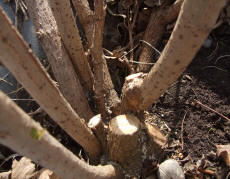 the
investment worthwhile by keeping them strong, healthy, sculpted
and growing in a way you want. Only with either a stroke
of very good luck, or through proper pruning, will ordinary
trees and shrubs become beautiful specimens. An
expensive Japanese Maple will be a pretty red leaved addition
to your garden, but with skillful pruning it can become that
gorgeous sculpture you see in pictures. the
investment worthwhile by keeping them strong, healthy, sculpted
and growing in a way you want. Only with either a stroke
of very good luck, or through proper pruning, will ordinary
trees and shrubs become beautiful specimens. An
expensive Japanese Maple will be a pretty red leaved addition
to your garden, but with skillful pruning it can become that
gorgeous sculpture you see in pictures.
This workshop helps gardeners understand what is going on when
woody plants are pruned. Learning to work together with
the plants' predictable natural response is
key. Anything is then possible - espalier; topiary; a
trained rather than grafted standard (small tree form); maximum
blooming each season; accentuated natural shape; healthy full
hedges without bare legs; trees with billowing grace rather than
a dense mop top; a rejuvenated old shrub with dignity
and maturity rather than having to rip it out for something
new.
The workshop focuses on shrubs but also covers the training of
a young trees, and basic do's and don'ts when pruning larger
trees. Hands-on demonstrations and training videos are
used whether we're indoors or out and a detailed 24 page lesson
manual to take home will ensure that you'll have the information
to review when you need it.
P.S. Last
year I had a beautiful large Maple cut down for a client. A
split had developed, caused by a major branch that had been
allowed to develop with very poor joint structure ("included"
bark) and it was now threatening to break off and crash into
the house.
If early in the tree’s life the owner had known what
to look for and made just one small pruning snip, the tree
could have lived a long life.
What is “included” bark you ask? Just one of the
valuable details you’ll learn in this workshop.
|
|
|
LIFTING
AND DIVIDING PERENNIALS
A 3 hour workshop
Whether you’re rejuvenating an overgrown Iris or
want to multiply what you have to spread around a larger area or
share with a friend, dividing perennials gives them renewed
vigor and is an inexpensive way to expand your garden.
In this workshop we’ll go through an overview of the
different types of root systems, how to determine the best times
for particular plants, and hands-on demonstrations of
different perennials to show exactly what you’re looking for
when dividing their roots. You’d be amazed at just how
many divisions can be made from just one overgrown patch of
daylily, hosta, coral bell, Iris, Dahlia, or ornamental grass. Ornamental
Grasses in particular are very tricky to divide, and we'll be
demonstrating at least one type.
You’ll take home a few starter plants of your own from
the demonstration plants, and gain the know-how you need to
create hundreds of dollars worth of new plants from the ones you
already have!
|
|
|
GREAT
PLANT COMBINATIONS
A 3 hour workshop on designing complimentary plant
partners and trios for all seasons.
The huge assortment of plants available today is overwhelming
and its easy to end up with a cluttered mess instead of the
beautiful garden you envisioned. In this workshop we’ll talk
about how to think of your plants in partnerships or trios and
demonstrate some classic examples of plant combinations that
work well in any setting. Learn how to take your
garden from spring to autumn with something blooming or
contributing at all times through creating good
partnerships.
Seeing a plant’s shape and form, not just flower
colour;
staging on slopes;
colour combinations that sing;
foliage contrasts;
creating vignettes with something for each season;
|
|
|
|
|